
Interior guide
Choosing interior paint colours and sheens for a Florida home
Florida light is bright, warm and changes a lot through the day. Combined with humidity, it changes how interior colours look and which finishes hold up best.
This guide covers how light affects colour, how to test samples properly, which sheen to use where, and what to think about in kitchens, bathrooms and open plan rooms. When you are ready to paint, see interior painting.
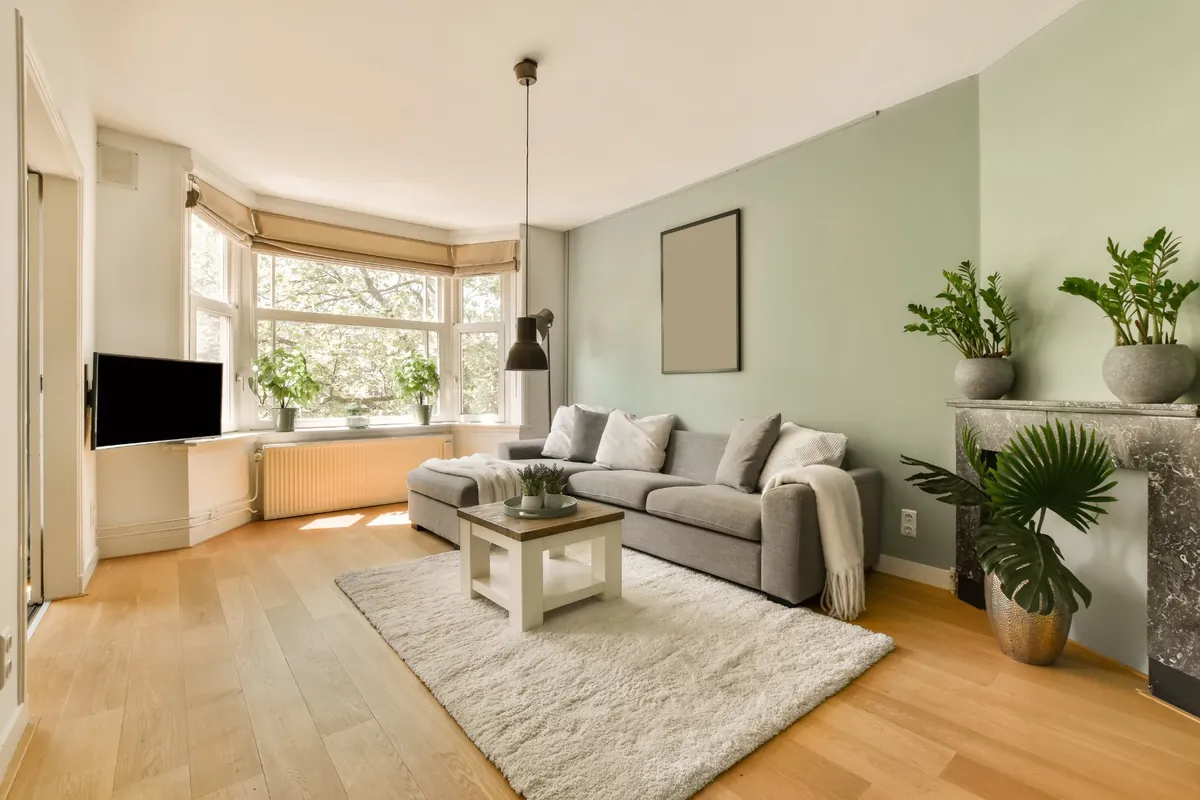
How Florida light changes colour
- Strong daylight washes colours out. A colour that looks rich on a chip can look much lighter on a sunny wall.
- Window direction matters. North facing rooms get cooler, even light. South and west rooms get warm, intense light, especially in the afternoon.
- Reflected light adds colour. Light bouncing off a pool, water, a lawn or a terracotta roof can tint a room.
- Your bulbs change things at night. Warm bulbs push colours yellow; cool bulbs push them blue.
How to test colours properly
- Narrow it down to two or three colours.
- Paint large samples, at least two feet square, or use large sample boards.
- Put samples on more than one wall, including one that gets direct sun and one that does not.
- Look at them in the morning, the afternoon and at night with the lights on.
- Look at them next to your floors, cabinets, counters and furniture.
- Live with them for a few days before deciding.
Sheen, room by room
Sheen is how much light the finish reflects. Higher sheens are more washable and moisture resistant, but they show surface flaws more.
- Ceilings: flat, to hide imperfections and reduce glare.
- Living rooms and bedrooms: matte or eggshell, for a soft look that still wipes clean.
- Hallways and kids' rooms: eggshell or satin, for more scrubbability.
- Kitchens: satin, which handles cooking moisture and cleaning.
- Bathrooms: satin or semi-gloss, with a paint that resists mildew.
- Trim, doors and cabinets: semi-gloss or gloss, for durability and easy cleaning.
Humidity, kitchens and bathrooms
Florida homes run air conditioning most of the year, but kitchens and bathrooms still see a lot of moisture. A few things help paint last there:
- Use paints rated for kitchens and baths, with mildew resistance.
- Clean and treat any existing mildew before painting, not after.
- Make sure exhaust fans work and are used, especially after showers.
- Let fresh paint cure before heavy steam or scrubbing.
Colour ideas that suit Florida homes
- Soft whites and warm neutrals keep rooms bright without glare in strong light.
- Muted greens and blue greens, such as sage and sea glass tones, feel calm and connect to the outdoors.
- Soft blues and greys work well in bedrooms and rooms with lots of sun.
- Deeper accent walls in navy, deep green or charcoal can ground an open plan room, especially on a wall that does not get direct sun.
Open plan homes
Many Florida homes flow from kitchen to dining to living space. A few approaches keep colour coherent:
- Use one main wall colour throughout the open area, and add interest with trim, an accent wall or a different sheen.
- Change colour at natural breaks, such as a corner, a doorway or a change in ceiling height.
- Keep trim and ceilings consistent throughout the house.
Prep makes interior paint look good
Clean lines and smooth walls come from preparation: filling holes and dents, sanding, caulking trim gaps, cleaning greasy kitchen walls, spot priming stains, and protecting floors and furniture. That is most of what separates a professional interior from a rushed one.
Questions we hear
What sheen should I use in a Florida bathroom?
Satin or semi-gloss is common in bathrooms because it resists moisture and cleans easily. Good ventilation matters as much as the paint.
Why does my paint colour look different on the wall?
Light changes colour. Strong Florida sun, window orientation and your light bulbs all shift how a colour reads. Always test a large sample on the wall.
Do ceilings need a special paint?
Ceiling paints are usually flat to hide imperfections and reduce glare. In bathrooms, a ceiling paint with moisture and mildew resistance is worth asking about.
How long does interior paint take to dry?
Most interior latex paints are dry to the touch fairly quickly, but take longer to cure fully. Be gentle with fresh walls for the first few weeks.
Ready to refresh a room or the whole house? See interior painting, or call (727) 490-9640 any time.