
Commercial guide
Planning a condo or HOA repaint: a guide for boards
Repainting a condo building or an HOA community is a project, not a paint job. Good planning protects the association's budget, keeps residents informed and gets a finish that lasts on the coast.
This guide is for board members, community managers and committee volunteers. It covers inspection, writing a scope, comparing bids, scheduling, communicating with residents and the coastal details that matter in Pinellas County. For our approach to this kind of work, see commercial painting.
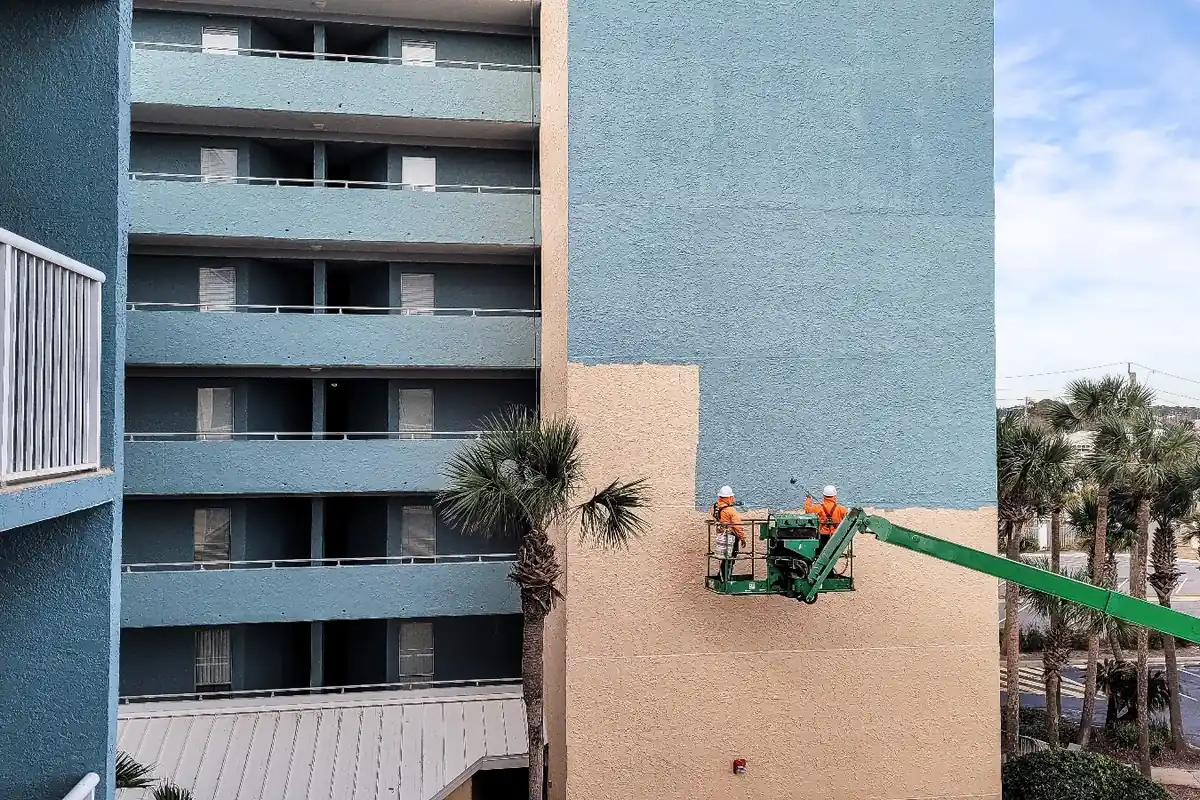
Step 1: Inspect before you specify
Start with an honest look at the buildings. The condition decides the scope.
- Fading, chalking and peeling, and on which elevations
- Stucco cracks, delamination and water staining
- Rust on railings, balconies, stairs, doors and fixtures
- Sealant joints around windows, doors and penetrations
- Mildew and algae on shaded walls
- Any signs of water intrusion that need repair before paint
Photos, organised by building and elevation, make every later step easier.
Step 2: Write a clear scope and specification
A written specification is what lets you compare bids fairly. It should cover:
- Surfaces included: walls, trim, doors, railings, stairwells, breezeways, garages, fences and so on.
- Prep and repairs: washing, mildew treatment, crack repair, sealant replacement, rust treatment.
- Products: primers and finish coats for each surface, and the number of coats.
- Colours and sheens, with exact codes.
- Work rules: hours, noise, parking, staging areas, storage and site cleanliness.
- Protection: landscaping, vehicles, windows, walkways and pool areas.
- Insurance and documentation required from the contractor.
- How changes and extra repairs are priced and approved.
Step 3: Compare bids like for like
- Send every bidder the same specification and offer a site walk.
- Check that each bid covers the full scope, without quietly excluding areas.
- Look at how repairs are handled: included, allowances, or unit rates.
- Compare products and coats, not just totals.
- Ask how the work will be sequenced and how residents will be kept informed.
- Ask what happens if something is not right afterward.
Step 4: Schedule with the weather and the residents
- The drier months are the easiest for exterior work and book up first.
- Summer work is possible with early starts and a flexible plan around afternoon storms.
- Hurricane season needs a plan to secure the site quickly when a storm approaches.
- Phasing building by building, or elevation by elevation, keeps disruption manageable.
- Avoid peak events in the community where you can.
Our guide to painting around hurricane season goes into the weather side in more detail.
Step 5: Communicate with residents
- Send a notice before work starts explaining the project, the schedule and what residents need to do.
- Give advance notice before each building or area, with dates for balconies, patios and parking.
- Explain when windows should stay closed and when walkways may be affected.
- Give one point of contact for questions and concerns.
- Update residents if the weather moves the schedule.
Coastal details that make the difference
- Salt removal before any coating goes on.
- Rust treatment on railings and metal, not just paint over the top.
- Sealant replacement at windows and joints, where water gets in first.
- Masonry coatings suited to full sun and driving rain, including elastomerics where the surface suits them.
- Lighter colours on sunny elevations to reduce heat and visible fading.
Step 6: Close out properly
- Walk each building with the contractor and make a punch list.
- Confirm touch ups are complete.
- Keep a record of products, colours, codes and dates for the association's files and future reserve planning.
- Store labelled leftover paint for touch ups.
Questions we hear
How far ahead should an association plan a repaint?
Well ahead. Specifications, bids, board approval, owner notices and scheduling all take time, so start long before you want work to begin.
What should be in a painting specification?
The surfaces, the prep and repairs expected, the products and number of coats, colours, work hours, access, protection of property and how changes are handled.
Do residents need to be home?
Usually not, but they may need to clear balconies and patios, move vehicles or keep windows closed on certain days. Clear notices make this easy.
Can work be done in phases?
Yes. Large buildings and communities are often painted building by building or elevation by elevation to keep disruption down.
Planning a repaint for your building or community? See commercial painting, or call (727) 490-9640 to set up a walkthrough.